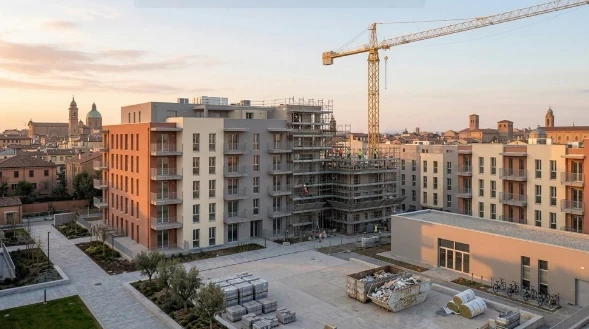
Europe’s real estate market has faced notable turbulence in recent years, with conventional sectors like office and retail properties challenged by changing work habits, the rise of e‑commerce, and broader economic uncertainty. In contrast, student housing has proven to be resilient and increasingly appealing. Steady enrollment trends, counter‑cyclical performance, and limited supply in key university cities contribute to consistently high occupancy rates and stable rental growth, making it a compelling opportunity to invest in student housing across the continent.
Structural Demand Outpacing Supply
A core driver behind student housing resilience is the persistent imbalance between student accommodation demand and bed supply in Europe’s university cities. According to a JLL report, the number of students across the European Union and the United Kingdom grew by about 15 percent over the past decade, reaching roughly 21.7 million students in 2022–23. It’s forecasted that this figure will climb by another 10 percent by the early 2030s, creating sustained demand for places to live close to campuses.
However, Europe’s current stock of PBSA beds, approximately 2.2 million units, falls far short of the need, especially if unmet demand continues to evolve. The report projects that an additional 3.2 million beds will be needed over the next five years to meet demand, highlighting the significant structural shortfall in purpose‑built supply.
The supply shortage is acute in many major cities. In the UK’s most mature PBSA market, provision rates hover around 40 percent, while in Germany and France they are closer to 20 percent, and in Spain and Italy they are as low as 16 percent and 10 percent respectively. This gap in supply helps explain why occupancy rates in student housing consistently approach or exceed full capacity.
Strong Occupancy Rates and Rental Growth
Resilience in any real estate sector depends in part on its ability to attract and retain tenants across economic cycles. In the student housing sector, occupancy rates have remained extremely high, even amid broader market stresses. Data from market researcher BONARD shows that average occupancy in Europe’s PBSA stock reached around 98 percent in 2024, up from 95.7 percent in 2021. This figure is remarkable compared with residential or commercial segments that may struggle with vacancies during downturns.
Closely linked to high occupancy is rent growth. Across many European cities, rents in student accommodation have risen faster than broader inflation. In 2023, PBSA rents increased by 6.5 percent, outpacing the general inflation rate of roughly 5.3 percent. Early 2024 figures also show continued growth, with rents up by 5.4 percent even as inflation eased to lower levels. These trends suggest that student housing can generate rental income that is more resilient than in many other property segments.
Demographic and Internationalisation Trends
The resilience of student housing is reinforced by structural demographic forces and patterns of educational migration. Many European countries have expanded the number of English‑taught programs to attract international students, enhancing their appeal as global education destinations. Reports show a 16.3 percent increase in international students attending European universities since 2019, a trend that strengthens housing demand in key academic cities.
Countries such as Spain have seen particularly rapid international growth. Reuters reported that Spain’s student housing market has drawn global investors as international enrollments surged by 77 percent over the past decade, increasing pressure on housing supply in cities like Madrid and Barcelona. Institutional capital is actively targeting these markets in pursuit of stronger yields and predictable rental income streams.
Domestic student populations also contribute to demand. Although some European nations face declining general populations due to aging demographics, the 18–25 age cohort remains substantial in urban hubs with major universities. This mix of domestic and international students sustains occupancy and reduces risk even when one factor shifts.
Counter‑Cyclical Performance and Stability
Property sectors that perform well irrespective of broader economic conditions are highly prized by investors. Student housing has proven to have counter‑cyclical characteristics, meaning that demand for student accommodation often holds up or even grows during economic slowdowns. One reason is that students may choose to pursue additional education rather than entering a weak job market, stabilizing or increasing demand for housing.
Another stabilizing factor is the relatively predictable nature of student tenancy. Academic calendars create recurring cycles of turnover and renewal, with most tenants signing leases at similar times each year. This predictability enhances cash flow reliability for investors, a contrast with some commercial tenants whose leasing patterns fluctuate more randomly.
Mainstream Institutional Interest
Investment into student housing has shifted dramatically over recent years, transitioning from a niche segment to a core part of institutional portfolios. Research found that PBSA’s share of European real estate investment climbed sharply, from 1.9 percent in 2019 to 5.3 percent in 2024, signaling increasing confidence in the asset class among major capital allocators.
Institutional preferences are reflected in acquisitions and consolidations across markets. For example, Australian finance firm Macquarie purchased two European student housing platforms managing more than 12,000 beds, demonstrating that institutional capital sees student housing as both a defensive and yield‑oriented sector.
In the UK, mergers such as Unite Group’s £723 million acquisition of Empiric Student Property illustrate how existing players are consolidating to serve larger portions of the student market.
These trends show that student housing is not just a small niche; it is now part of mainstream real estate strategy for institutional investors seeking assets with stable demand, reliable occupancy, and robust rental growth.

International Student Mobility and Local Housing Pressure
While institutional demand underlines the sector’s investment appeal, student housing also has societal impacts that underscore its complexity. The surge in student accommodation investment in markets like Spain has raised affordability concerns. Reuters reports that newly developed student flats, often commanding premium rents, can be out of reach for many local students, particularly where international student numbers are high and supply remains limited. This situation highlights the balancing act between investment performance and social equity in housing markets.
Such dynamics can strain local housing ecosystems, especially in cities with existing affordability challenges. Policymakers and planners may need to consider how student housing development interacts with broader rental markets to ensure that growth in one segment does not displace or disadvantage other residents.
Yield Profiles and Investment Returns
From an investment return perspective, student housing also benefits from favorable yield profiles. As institutional investors seek assets with inflation‑linked income potential, PBSA provides annual rental uplifts through short‑term leases tied to academic cycles, often allowing operators to reset rents yearly. This structure contrasts with longer‑term commercial leases, where rent escalations may be tied to broader market negotiations and longer lock‑in periods.
According to investor analyses, PBSA yields in Europe often outpace those in conventional multifamily or office sectors, contributing to the asset class’s attractiveness, especially in a higher interest rate environment. These returns, combined with high occupancy and steady demand, position student housing as a compelling option for diversified real estate portfolios.
Challenges and Risks
Despite its strengths, student housing is not without risk. The sector’s performance hinges on continued demand for university education and international mobility. Demographic shifts, regulatory changes affecting student visas, or disruptions in higher education delivery, such as prolonged declines in international student enrollments, could affect demand projections.
Furthermore, the undersupply that supports strong occupancy also constrains development opportunities. Planning hurdles, rising construction costs, and regulatory requirements in many European cities make new PBSA development challenging, leading to slow supply growth relative to demand. This structural imbalance supports current performance but also highlights a long‑term need for strategic planning and careful execution.
Investor concentration in certain markets, like the UK, can also create regional risk, as economic or policy shifts in key hubs may disproportionately affect returns.
A Sector Poised for Long‑Term Demand
Despite challenges, the outlook for European student housing remains robust. With consistent demographic drivers, global demand for higher education, and a chronic shortage of purpose‑built beds, the sector has demonstrated strong resilience compared with many other real estate asset classes. Its counter‑cyclical nature, coupled with high occupancy and rent growth, aligns with institutional priorities for stable income and long‑term performance.
As project pipelines expand, operational efficiencies improve, and investor familiarity grows, student housing is likely to remain an integral part of European real estate investment strategies. In markets where supply continues to lag behind demand, the value proposition for PBSA remains clear: a resilient, demand‑backed real estate sector offering predictable returns amid broader market uncertainty.