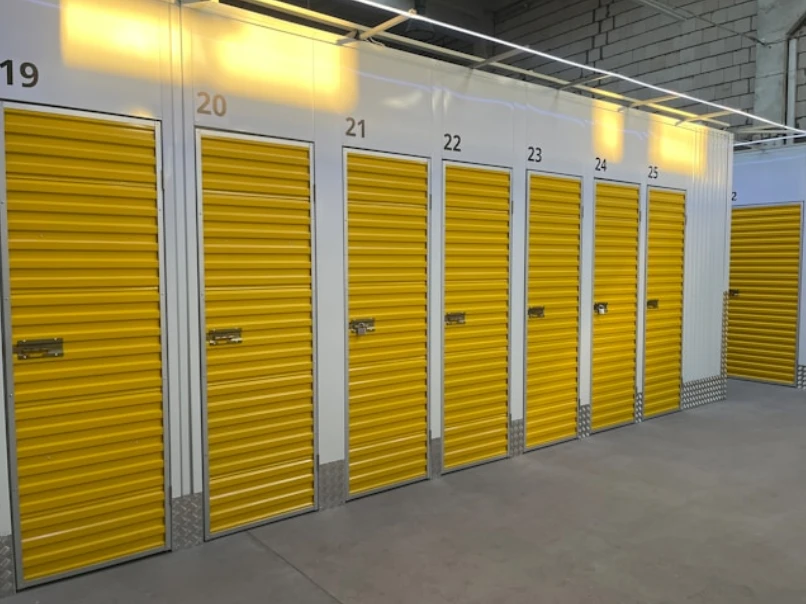
Few asset classes have benefited more directly from the institutional rotation into operational real estate than self-storage. Once the preserve of small independent operators and overlooked by serious capital, it now commands attention from private equity, family offices, and institutional investors globally. The reasons are structural rather than cyclical: stable and growing demand anchored in the patterns of everyday life rather than corporate fortunes; inflation-linked income from a short-term leasing model that allows rapid repricing; recession resilience that has been tested and validated across multiple downturns; and a scalability and operational simplicity that produces strong risk-adjusted returns few other property types can match. Across Europe, the structural undersupply that defines most continental markets adds a further dimension that remains, for now, significantly underpriced. While the US market has matured into a heavily institutionalised, supply-normalising environment, Europe sits at an earlier and more attractive point in its development cycle - wider cap rates, growing consumer awareness, and a consolidation cycle barely started - precisely the conditions US investors enjoyed a generation ago.
A Sector Transformed by Institutional Capital
Two decades ago, self-storage was a fragmented, locally driven industry. Today it is a recognised institutional asset class, tracked by investment managers and advisors, traded by listed REITs, and targeted by some of the world's largest capital allocators. According to Savills, investment volumes across the UK and Europe grew year-on-year between 2020 and 2024, reaching a record €1.2 billion in 2024, fuelled by strong post-pandemic operating performance and a deliberate reallocation of capital away from more disrupted commercial real estate sectors such as retail and offices.
The scale of the market now supports meaningful institutional deployment. As of 2025, portfolios of €100-€200 million are increasingly common, and eight European platforms have reached valuations above €1 billion, enabling significant allocations from large institutional investors and facilitating cross-border consolidation. The FEDESSA/CBRE European Self Storage Industry Report 2025 records 5,435 stores in operation across 16 countries, reflecting continued expansion across the continent and a sector that has grown by nearly 250% in facility count over the past decade.
The depth of institutional conviction is perhaps best illustrated by ownership patterns in the US listed market. In large self-storage REITs such as Public Storage and Extra Space, passive index giants (Vanguard, BlackRock, and State Street) typically account for 30-40% of the register, with active long-only managers (Capital Group, Fidelity, T. Rowe Price, and J.P. Morgan Asset Management) holding a further 30-40%. REIT specialists such as Cohen and Steers, AEW Capital Management, and Invesco Real Estate add a further 5-15%. The result is a shareholder base that more closely resembles a quality technology company than a traditional real estate asset - a signal of how far the sector has moved from its fragmented origins.
The Investment Case: Cash Flow, Margins, and Resilience
Self-storage generates consistent, diversified revenue from a large base of short-term rental contracts. This structure confers an advantage that long-lease property types cannot match: the ability to reprice rapidly in response to market conditions, including inflation. Rental income accounts for approximately 85-90% of total revenues, supplemented by ancillary fees. Self-storage generates NOI margins of 65-75% (the highest of any commercial real estate asset class, according to the 2026 Self-Storage Investment White Paper, Hearthfire Holdings, 2026) - substantially higher than most other real estate categories. The UK market demonstrates this premium clearly: average rental rates stand at approximately €315 per square metre per annum, above the European average of €290, according to FEDESSA/JLL 2024 data.
The low maintenance cost profile reinforces this further. Standard self-storage units require minimal upkeep (no climate systems, no dedicated lighting, no complex infrastructure). In its simplest form, a padlock secures the unit. Maintenance costs typically run at around 7% of revenues, among the lowest of any real estate asset class. Even in more sophisticated, technology-enabled facilities, the operational footprint remains lean relative to commercial or residential property.
Occupancy performance reinforces the income case. Institutional-grade facilities consistently maintain occupancy of 80-90%. Critically, customers tend to stay considerably longer than the short-term nature that the contract might imply, with average rental durations of 14-18 months commonly cited across the industry - a figure that reflects the genuine stickiness of demand rather than simply the absence of alternatives.
That stickiness matters most in economic downturns, which is precisely when other real estate sectors suffer most. Self-storage demand is driven by life events (relocating, downsizing, divorce, business change) that are largely independent of economic cycles. During the 2008 financial crisis and again during the COVID-19 disruption, the sector proved its defensive credentials: occupancy held while office and retail fell sharply.

Demand Drivers: Beyond the Traditional Customer
The self-storage customer base has broadened considerably in recent years, and this diversification is itself a source of portfolio resilience. Personal usage (households managing moves, downsizing, or space constraints in increasingly compact urban homes) still accounts for around 70% of demand across Europe. But the commercial segment is growing faster, and the structural drivers behind it are durable.
Small and medium-sized enterprises (SMEs), e-commerce entrepreneurs, and tradespeople represent a substantial and growing share of demand. For a small business operator tied to a monthly self-storage contract, the flexibility is transformative compared to a five or ten-year warehouse lease. Modern facilities act as logistics hubs (offering goods receipt, inventory management, and 24-hour access) effectively functioning as on-demand micro-warehousing for the modern economy. According to StorTrack, business storage in Europe is growing at approximately 7.5% CAGR, with climate-controlled units expanding even faster at around 9% CAGR, driven in part by compliance requirements for secure document and data storage.
Alongside SME growth, structural demographic and urban trends continue to support consumer demand. Over 75% of Europe's population now lives in urban areas, according to the European Commission, and average dwelling sizes are shrinking as housing costs rise. Hybrid working patterns have further disrupted traditional space use, with employees increasingly managing more possessions between smaller primary homes and without access to large office storage. Savills identifies hybrid working, elevated housing costs, urbanisation, and SME/e-commerce storage needs as structural demand drivers that have reinforced the sector’s resilience through changing macroeconomic conditions.
Portugal illustrates the dynamic acutely: house prices rose 17.2% year-on-year in Q2 2025 (the steepest increase in the EU, per Eurostat), Lisbon rents have risen 94% since 2015, and the EU estimates a structural housing deficit of 465,000 units by 2035. In markets where living space is both scarce and expensive, self-storage becomes less of a convenience and more of a necessity.
Portfolio Diversification: A Different Risk Profile
Self-storage's correlation profile is one of its most attractive characteristics for portfolio construction. Its performance is not tethered to employment trends, corporate real estate cycles, or consumer discretionary spending in the way that office, retail, or hospitality assets are. When office occupancy fell sharply during the pandemic, self-storage demand rose. When retail footfall collapsed, storage demand from displaced businesses and households increased. This counter-cyclical (or a-cyclical) behaviour provides genuine diversification in a portfolio context, not merely theoretical low correlation.
The inflation hedge dynamic is equally well-supported. Short-term contracts allow operators to raise rents far more frequently than sectors locked into long-term indexed leases, and in practice, many operators use existing customer rate increases (ECRIs) to maintain real returns. Savills data shows some UK operators achieving rental growth exceeding 10% per annum through this mechanism even in a softer operating environment. At the European level, the CBRE European Self Storage Industry Report 2025 records average rental rates per square metre increasing by 5.4% across the continent in 2025, even as occupancy softened slightly - a pattern that illustrates precisely how the repricing mechanism works in practice.
Operational Advantages and the Consolidation Opportunity
Self-storage is operationally simpler than almost any other real estate category. Minimal staffing, low maintenance requirements, and limited tenant interaction keep the cost base lean. Technology has extended this advantage: automated access systems, online leasing platforms, AI-driven dynamic pricing, and digital marketing have reduced the per-unit cost of operation while improving revenue optimisation. The UK's recent cost pressures (higher business rates, increased employer National Insurance contributions, and rising minimum wage costs) have in fact accelerated automation investment, compressing headcount per store while improving margin control.
The scale of this technological shift is significant. The CBRE European Self Storage Industry Report 2025 found that around 90% of European operators are now using AI or advanced technology in their operations - a figure that signals the sector has moved well beyond early adoption. The practical consequence is a widening gap between modern, technology-enabled facilities and older stock. Data already shows that high-quality assets are outperforming secondary facilities in both occupancy and rental growth, creating a two-tier market where asset quality and management capability directly determine returns. For investors, this means sector exposure alone is insufficient - platform quality is the primary driver of performance.
ESG is a growing consideration in both operational management and capital allocation. Self-storage is structurally well-positioned relative to other real estate asset classes: standard units have a minimal energy footprint, and large, flat roof areas are well-suited to solar panel installation, reducing grid dependence and operating costs simultaneously. European sustainability legislation is accelerating investment in LED lighting, energy-efficient climate control systems, and renewable energy generation across the sector (FEDESSA, 2025). For investors, this matters in two ways: ESG compliance reduces regulatory and reputational risk as European environmental standards tighten, and assets with credible sustainability credentials are increasingly commanding valuation premiums and attracting a broader pool of institutional capital.
The fragmented ownership structure of the sector creates a parallel opportunity. Despite holding over 5,100 facilities and generating more than £1 billion in annual revenues, the UK market remains widely dispersed between independent operators and institutional platforms. Across Europe, the picture is more fragmented still. Savills forecasts that consolidation and platform-based mergers and acquisitions will define 2026, with investors seeking high-quality portfolios and selective entry opportunities. Larger operators demonstrably benefit from joint marketing structures, integrated technology, lower financing costs, and stronger brand pricing power - advantages that compound as platforms scale.

The European Opportunity: Earlier Stage, Stronger Upside
The investment case for European self-storage (and particularly for continental markets) is more compelling today than it has been at any point in the sector's recent history. The reason is structural: European penetration remains dramatically below both the UK and the US. Savills reports that continental Europe averages just 0.03 sq m of storage space per capita, compared to under 0.09 sq m in the UK and approximately 0.65 sq m in the US. That gap is not a rounding error - it represents years of demand runway as consumer awareness matures and urbanisation deepens.
The divergence in recent performance between the UK and continental Europe reinforces this view. The UK market, as Europe's most developed and competitive, has faced headwinds from weaker GDP growth, subdued housing transactions, and rising operating costs. Continental European markets, by contrast, remain in earlier growth phases: structural undersupply, rising consumer awareness, and more favourable economic backdrops have driven stronger performance. As Savills H1 2025 data notes, occupancy and rental growth in Europe have been broadly more positive than in the UK, underscoring the depth of unmet demand in these markets.
Germany and Portugal illustrate this dynamic clearly. Germany is the second-largest self-storage market in Europe by number of facilities, yet per capita supply remains a fraction of UK levels and awareness is still building. Portugal combines an acute housing crisis (the fastest-rising house prices in the EU in 2025, per Eurostat) with some of the lowest self-storage penetration on the continent and consumer awareness that is, by FEDESSA’s own assessment, still nascent. Yet rental rates in Portugal already grew by more than 5% in 2024 (FEDESSA/CBRE), signalling that where supply does exist, demand is there. Both markets exhibit the characteristics that defined the UK a decade ago: fragmented supply, significant institutional undersupply, and structural demand drivers firmly in place.
The debt market reflects this confidence. According to Savills, lenders are attracted to the sector's resilient cash flows and diversified rental base, with competition strongest for larger, stabilised portfolios, banks comfortable extending leverage up to 60% LTV, and alternative lenders providing liquidity at 70% LTV. Improving financing conditions in 2026 (as interest rates continue to ease and bid-ask spreads narrow) are expected to support a recovery in transactional volumes after a quieter 2025.
New Formats, Expanding the Addressable Market
One structural development deserving attention is the rise of micro and urban storage formats. Land scarcity and planning constraints in major European cities have historically limited large-scale self-storage development in prime urban locations. Smaller, technology-enabled sub-500 sq m facilities and hub-and-satellite models are changing this, allowing operators to access densely populated catchments that were previously out of reach. These formats typically deliver higher revenue per square metre, though with correspondingly less margin for operational error. For investors, they represent an extension of the addressable market rather than a replacement of the traditional model - one that is particularly relevant in the constrained urban environments of continental Europe where demand density is high and conventional development sites are scarce.
Risks: Where the Case Requires Nuance
The self-storage investment case is strong, but not unconditional. In the UK and certain other mature markets, accelerated development has created pockets of oversupply in major urban centres, placing localised downward pressure on rental rates. SSA UK data shows total available UK space has grown to over 5.95 million sq m, with a growing pipeline in some geographies intensifying competition. The housing market connection introduces a further variable: a prolonged slowdown in transactions can dampen move-related intake, even if longer tenant stays partially offset the impact. The growing divergence between high-quality and secondary assets means that asset selection and active management are increasingly the determinants of return, not simply market exposure. In continental Europe, these risks are less acute (supply constraints rather than oversupply characterise most markets) but execution risk in development-led strategies remains real.
Outlook
The self-storage sector enters 2026 in a position of structural strength. Savills forecasts that delayed transaction processes will re-emerge through the year and improving financing conditions will underpin a recovery in deal activity. Operator sentiment is consistent with this view: the CBRE European Self Storage Industry Report 2025 finds that 70% of European operators expect improvements in both occupancy and rental levels over the coming year. Consolidation will accelerate as institutional capital pursues scale, and technology (AI-driven pricing, automated operations, enhanced digital customer experience) will continue to widen the gap between sophisticated operators and those unable to invest in modernisation. The underlying demand drivers, from urbanisation and shrinking living spaces to e-commerce micro-fulfilment and an ageing population managing transitions, show no sign of abating.
For investors seeking real estate exposure that delivers stable income, inflation protection, genuine portfolio diversification, and access to a long-duration growth story, self-storage in Europe represents one of the most compelling propositions currently available. The sector is no longer niche - but in much of Europe, it is still early.